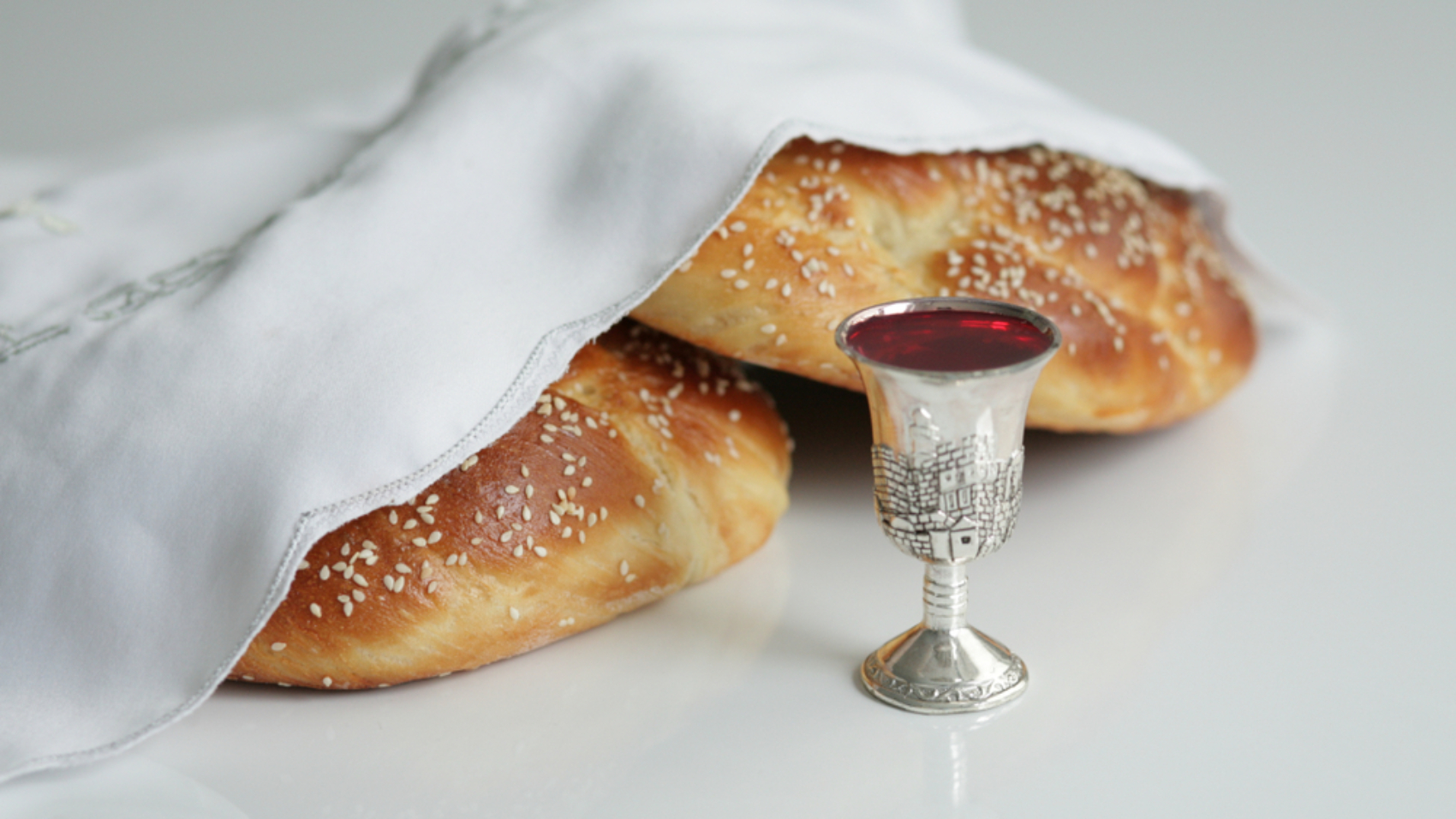
How have traditional images shaped our understanding of Scripture? Explore how familiar artistic depictions of biblical events can distort important details and influence the way we interpret the Word of Yehovah.
The Nature of Adam
Many people don’t want to have children. And those who do often don’t know what to do with them or how to raise them, so they end up in the hands of strangers or in the educational and social systems.
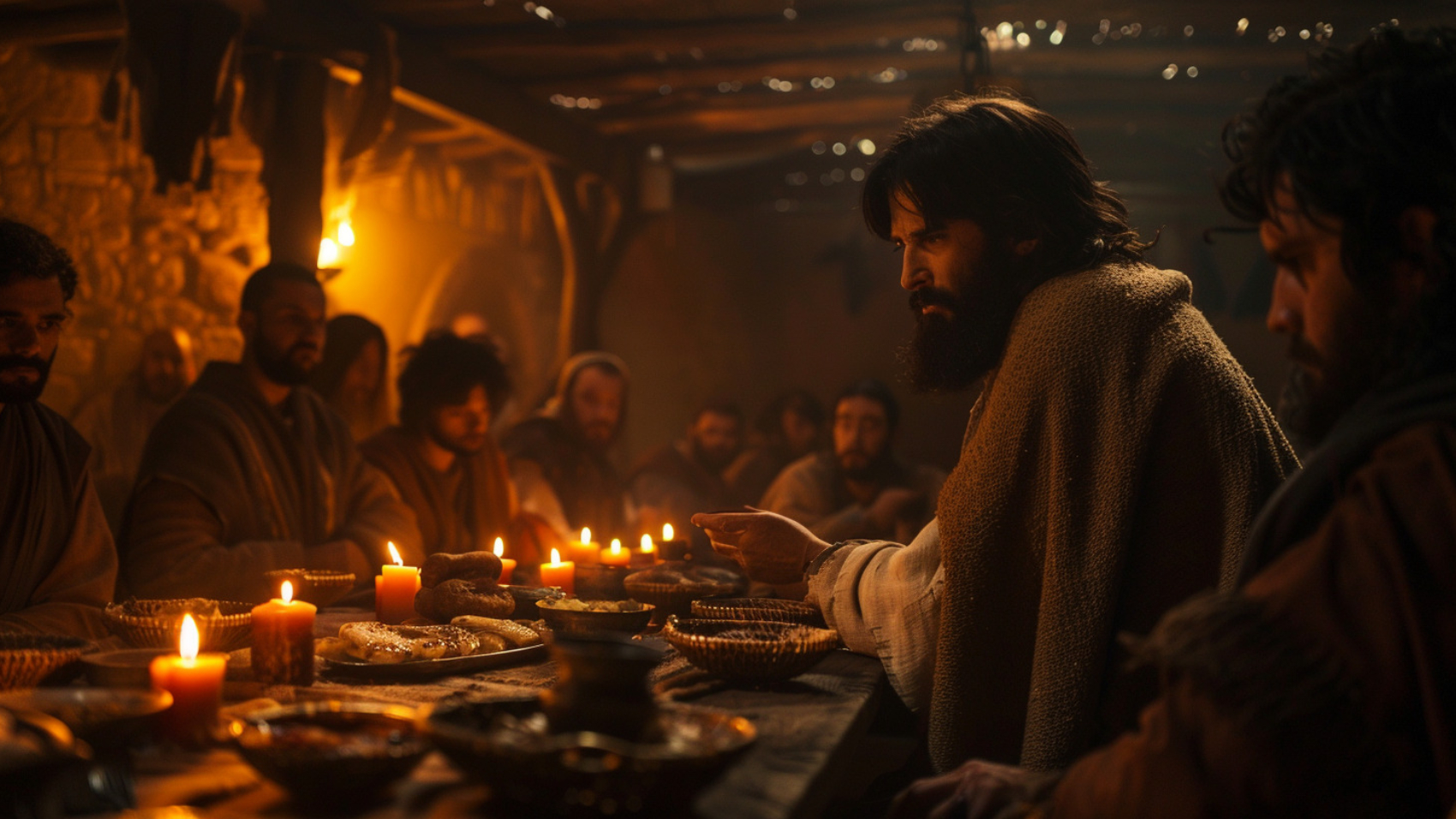
The Jewishness of Yeshua
After Yeshua’s departure and as the years went by, many non-Jewish people of multiple backgrounds entered the community of his followers, whose influence, little by little, began to distance themselves from the Jewish community…
The History of the Apocryphal Books
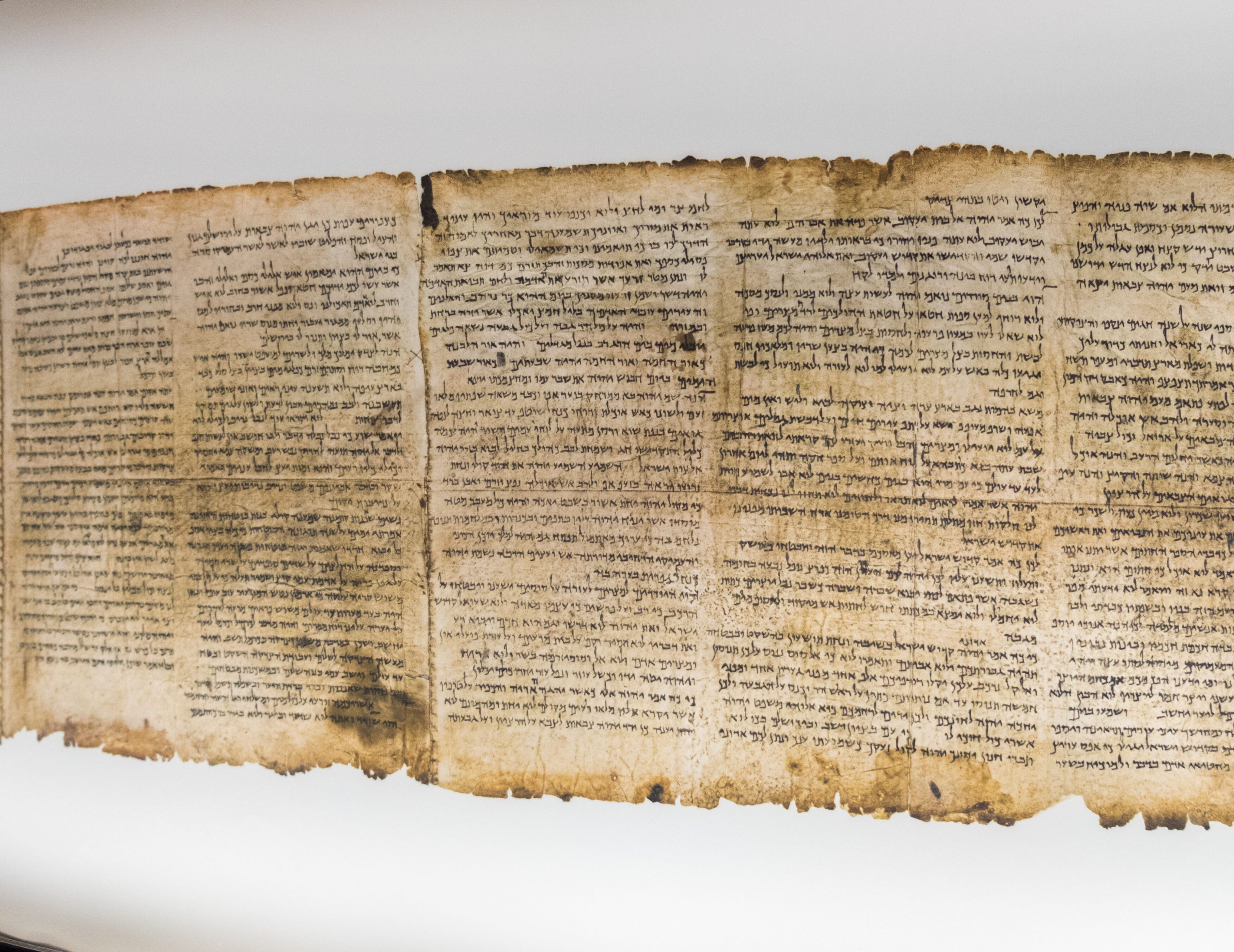
One of the oldest books found among the Dead Sea Scrolls in Qumran is the Book of Enoch.
The Bibles we have today include a compendium of books that were written at a particular period in history. The word canon, whose origin is generally traced to the Greek κανών which is a measuring rod, actually comes from the even more ancient Hebrew קנה (cané) which is a reed, and, precisely, was used for measuring. So we can deduce that the biblical canon refers to the group of books that have authority in terms of religious doctrine, whether in Christianity, Judaism, or Catholicism, whose respective canons differ from one another.
Needless to say, such authority in doctrinal matters was decided by the religious leaders of the time, so it is logical to attribute a certain subjectivity to such selection. Although most Christians consider the 66 books of their canon as the only “inspired” or “worthy of being taken as doctrinal”, the reality is that depending on the religious culture in which one has been raised, this will change. Just imagine that until before Martin Luther, works such as the books of Tobit or Judith would have been common knowledge.
How old are these books?
The biblical period covered by the apocryphal books is mostly limited to the Second Temple period, between the last prophets, concluding with Malachi, and the New Testament literature. This spans from around 300 BCE to 50 or 100 CE. There are later works from this time that were used by the so-called Church Fathers, but these would be included in another category as they relate exclusively to the New Testament and were written even after the closure of the Jewish canon in the 1st century.
One of the oldest books found among the Dead Sea Scrolls in Qumran is the Book of Enoch. This book, not included in the Jewish or Catholic canon, appears in more than ten different manuscripts in Qumran, written in what is believed to be the original Aramaic. Communities of believers in Syria and Ethiopia also preserved this book in their own languages (in Syria, Aramaic was spoken but had a different type of script, in contrast to the Essenes, who wrote Aramaic with the Hebrew letters we know today, which are originally Aramaic).
Other well-known works found in Qumran include the Book of Maccabees, Ben Sira, and Tobit.
Who decided which books entered the canon?
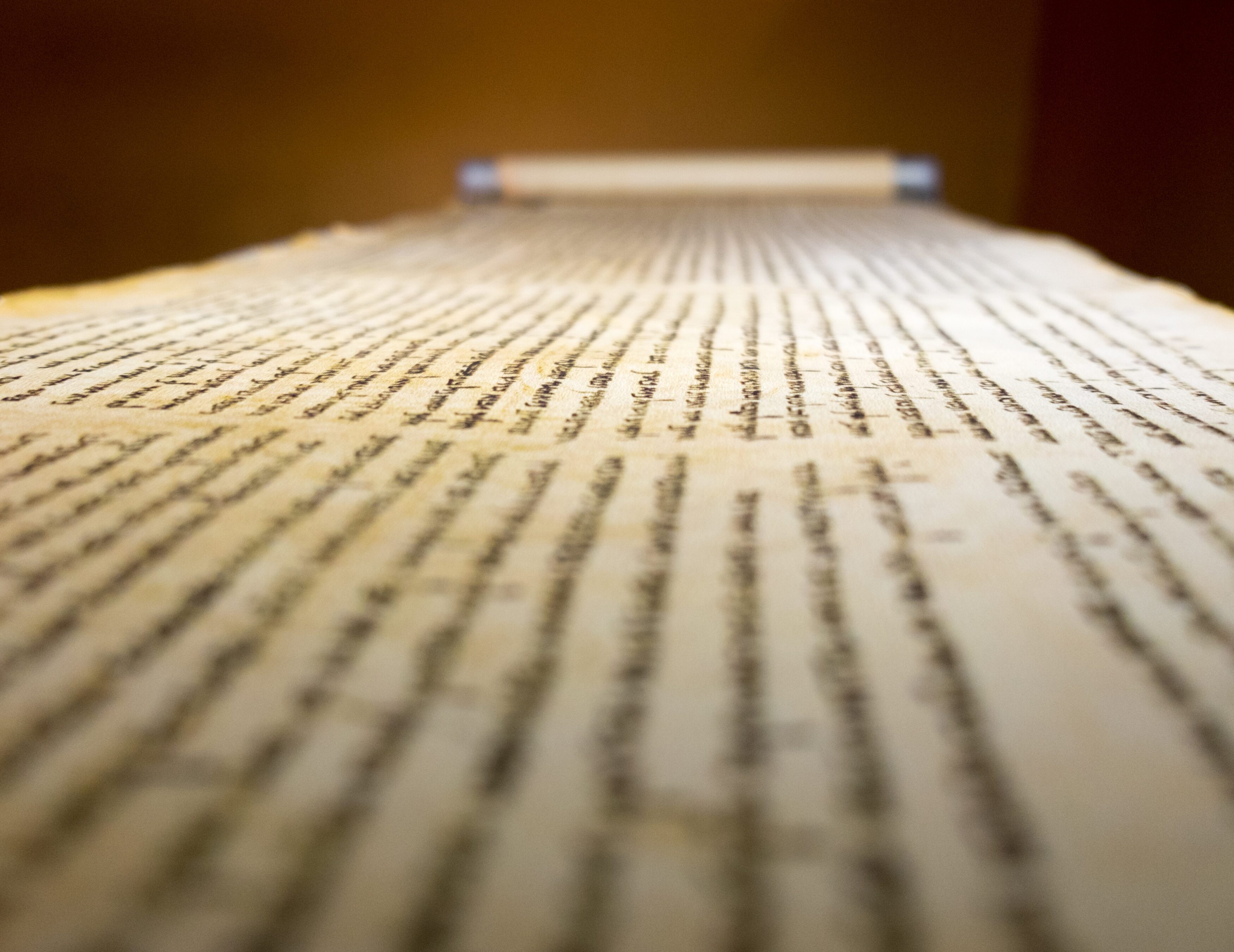
In the case of Judaism in Israel, a rabbinic assembly was formed, gathering in the city of Yavne around the year 100 CE. Although most writings in the Torah and the prophets were widely accepted, there was some controversy surrounding different books among the writings, such as the Song of Solomon and Daniel, the latter being written in Aramaic. One of the main reasons why many apocryphal books did not enter the Jewish canon was precisely because there were no Hebrew copies.
Other Jewish communities did not necessarily accept the authority of the rabbinic leadership in Israel and continued to use books they considered worthy of study. This is the case with the Ethiopian community of Beta Israel, which included, among others, the aforementioned books, the Book of Jubilees, the Testament of Abraham, the Testament of Isaac, and the Testament of Jacob.
The Catholic Church defined its canon at the Council of Rome in the fourth century, commissioning Jerome to translate the list of books into Latin. In the Eastern Church in Syria, different lists were maintained, and a unanimous decision regarding the canon was never reached. Some “extra” epistles found there include the Prayer of Manasseh and Psalm 151, while, for example, the Book of Lamentations is excluded.
During the Protestant Reformation, Luther decided to differentiate from the Catholic canon and moved seven books (Tobit, Judith, 1–2 Maccabees, Wisdom, Sirach, and Baruch), placing them in the Apocrypha section (“books not considered on par with the Holy Scriptures but worthy of being read and studied”). Despite moving them, at least he included and promoted their study. Unfortunately, this distinction paved the way for their eventual exclusion altogether.
Is it relevant to study these books?
If we limit ourselves to what Martin Luther said, then yes. Beyond Luther, it is worth delving into the historical context of each work. The discovery of the Dead Sea Scrolls shed new light, confirming that Jewish communities of this time, even in the Land of Israel, considered many of these works worthy of study. In each of these books, we can appreciate not only ethical, moral, or spiritual messages but also the cultural environment of the Jewish people in a period of history that is unfortunately absent from our current Bibles.
Unmistakable Signs of the End of the Age
It would take naivety and innocence to affirm that political leaders will somehow find answers to all this chaos.
Likewise, just as it happened in the days of Lot: they ate, they drank, they bought, they sold, they planted, they built; but on the day that Lot went out of Sodom, it rained fire and brimstone from heaven and destroyed them all. Even so will it be on the day when the Son of Man is revealed. Luke 17:28-30
On several occasions, Yeshua declared that prior to His return, the situation would be similar to the days preceding the Flood and the punishment of Sodom and Gomorrah. And what were those conditions? Nothing more and nothing less than the ones we are witnessing. Let’s see:
- Abortions – equivalent to the sacrifices of children offered to demons, disregarding the life given by the Creator.
- Greed – Insatiable desire for material things. At present, almost all activities in life revolve around buying and selling some product. Humanity is insatiable and is not ashamed of it.
- Unions outside of marriage – Fornication – Adultery. Relationships have been degraded to the purely physical level, and in the best cases, marriage is just a social activity without any commitment.
- Excesses in food and drink – Today, the proliferation of exotic and unhealthy foods leads to gluttony and dependence on them; the same happens with drinks, and poor health is the consequence of these excesses.
- Industrial food production – Through genetically manipulated seeds, a few companies produce food for humanity because most people are clustered in cities, disconnected from Creation and its Creator.
- Unprecedented construction – as a response to the needs of the crowds crowded in urban centers.
Faced with all of the above, you don’t need to be a scientist or a prophet to identify the current conditions. Just open your eyes and look around. Of course, we haven’t mentioned all the other situations that are also already present: frequent earthquakes, diseases due to people’s blind trust in official health systems, pollution of our planet, complete imbalance in the delicate system created by YeHoVaH… etc.
So, ask yourself if you truly believe that this will improve through a political party or a human leader. If your answer is negative, ask yourself this other question: how long will this situation last? It would take naivety and innocence to affirm that political leaders will somehow find answers to all this chaos. No. The situation will worsen because it’s foreseen to.
Yeshua warned us in advance that this would happen; moreover, He encouraged us to lift our faces because when this is being fulfilled, it means our liberation is near. It is planned that these things will happen before His return to establish a real kingdom of justice and peace.
There’s no room for fear because we have hope in the promises of our Eternal Father YeHoVaH, who will intervene in due time to rescue His faithful remnant who have separated themselves from the contaminated system and placed their trust in Him. It’s time to align your daily life with His commandments. If you haven’t done so yet, what are you waiting for?
Shabbat, the First Commandment
In these erratic times in which we live, where we spend most of our time working to acquire material possessions, separating the Sabbath day from the rest of the days is a true sign (Exodus 31:17) that reminds us of whom we truly serve.
“And the Lord said to Moses, ‘Write these words, for according to the tenor of these words I have made a covenant with you and with Israel.’ So he was there with the Lord forty days and forty nights; he neither ate bread nor drank water. And He wrote on the tablets the words of the covenant, the Ten Commandments.” Exodus 34:27-28
Among these Ten Commandments, which even most Christians pride themselves on observing, is the Sabbath, the fourth commandment:“Remember the Sabbath day, to keep it holy. Six days you shall labor and do all your work, but the seventh day is the Sabbath of the Lord your God. In it you shall do no work: you, nor your son, nor your daughter, nor your male servant, nor your female servant, nor your cattle, nor your stranger who is within your gates. For in six days the Lord made the heavens and the earth, the sea, and all that is in them, and rested the seventh day. Therefore, the Lord blessed the Sabbath day and hallowed it.” Exodus 20:8-11
Although this verse speaks of “remembering” the Sabbath, in the recounting of the commandments in Deuteronomy 5, it speaks of “keeping” it.Why is the Shabbath the first commandment?
When the commandment of the Sabbath was first declared by the Creator in Exodus 20, it appears in the fourth position. So why do I say that the Sabbath is the first commandment? Simple, when we follow the chronology of the Israelites’ exodus from Egypt, on their way to Mount Sinai, in the second month, they complained and received manna from heaven. A few days after the manna started to fall, Moses told them:“Tomorrow is a Sabbath rest, a holy Sabbath to the Lord. So bake what you want to bake and boil what you want to boil. Save whatever is left and keep it until morning.” Exodus 16:23
This is how we can see that the Sabbath was introduced weeks before the Israelites reached Mount Sinai and had implications regarding the collection and preparation of food.Where does the Sabbath come from?
The Sabbath is defined in the creation week at the beginning of the book of Genesis. Thousands of years before the Torah was given and even before Abraham was chosen, the Creator established this model and pattern of seven days. When we study different elements of Creation, we realize that the number 7 is extremely relevant and cannot be altered, whether it’s the 7 musical notes (do re mi fa sol la si), the 7 colors of the rainbow, or the 7 days of the week. Throughout the Biblical narrative, we encounter this number time and time again.Conclusion
Being the first commandment that appears after the Israelites’ liberation from slavery, we see that it holds special importance. It is no coincidence that most believers interested in the Hebrew roots of Christianity begin with this very commandment. In these erratic times in which we live, where we spend most of our time working to acquire material possessions, separating the Sabbath day from the rest of the days is a true sign (Exodus 31:17) that reminds us of whom we truly serve. For more information about the Sabbath day, click here.The Feasts of YeHoVaH
Modern lifestyle has disconnected us from nature – Yehovah’s Creation – and has connected us to an artificial life that prevents us from understanding the way God acts.
We were created to interact with Creation at all its levels. The original mandate was: “fill the earth and govern it.” Instead of that, we have grouped ourselves to live in paved cities, full of skyscrapers, highly polluted, and we have lost sight of the Garden in which we were originally placed.
Modern lifestyle has disconnected us from nature – Yehovah’s Creation – and has connected us to an artificial life that prevents us from understanding the way God acts.
In this condition, we do not know or understand the Festivals that were given to us, as they are linked to nature and the cycles of food cultivation.
Not only have we lost the opportunity to recognize the hand of our Father in nature, but we also ignore the meaning of the Appointed Times gave by Him. Yehovah our Father determined multiple celebrations throughout the year:
For the Spring season:
- The Celebration of Pesach (Passover).
- The Feast of Matzot (Unleavened Bread).
- The celebration of Bikkurim (First Fruits).
- The Feast of Shavuot (Weeks or Pentecost).
For the Fall season:
- The celebration of Yom Teruah (Trumpets).
- The celebration of Yom Kippurim (Day of Atonements).
- The Feast of Sukkot (Tabernacles).
We then have Four Celebrations and Three Festivals each year. But we also have at the beginning of each month, the celebration of Yom Kodesh or the beginning of the lunar month (see topic: Yehovah’s Calendar), and every week, we have the Shabbat, a gift from our Father so that we can suspend the routines that sometimes overwhelm us and take a break in His presence (see topic: Shabbath, the First Commandment).
In general, we can affirm that these Celebrations and Festivals have several purposes:
Setting aside time to be with Him, knowing Him, and thanking Him for His constant provision.
Keeping us alert to the development of His perfect Eternal Plan.
Identifying ourselves as His people by honoring Him.
Recreating and rejoicing in the proper and non-harmful manner.
When we practice these Celebrations and Festivals, we are acknowledging that Yehovah is the center of our existence, so we orbit around Him throughout the year, and in that way, we testify that He is the most important person in our lives. Additionally, these are opportunities to develop our interpersonal relationships and take time to rest and enjoy the things He provides for us.
Decide to participate in Yehovah’s Festivals because you will gain an understanding of His Word that is not possible to achieve otherwise.
The Calendar of YeHoVaH
The emphasis on the importance of knowing and understanding Yehovah’s Calendar will never be overstated because the prophetic events of the Scriptures are not aligned with the calendar that the world uses day by day. Because of this, many will be taken by surprise like a thief in the night. Here is a brief introduction to the topic.
The Days
From the moment we are born, the counting of time begins for each of us. According to the date our parents claim we were born, we start counting the days, weeks, months, and years. That special day we celebrate every year begins at 12:00 a.m., that is, midnight, and ends one second before midnight of the next day. However, our Eternal Father defined the start and end of days differently. When we read the account of Creation in the Bible, each stage of the process is described as:
“And there was evening and there was morning, the first day.” Genesis 1:5
Therefore, days begin at sunset and end 24 hours later when the sun sets again.
The Weeks
Scripture only gives a name to the seventh day: Shabbat in Hebrew (Sabbath in English). The other days are recognized as the first day of the week, the second day of the week, and so on until the sixth day. English translations keep the name Sabbath for that day. However, some translations into other languages have substituted the Hebrew word Shabbat for the word Saturday, or for the expression “day of rest”, thus making it difficult to recognize both the Shabbat and the fulfillment of what our Eternal Father commanded.
The Months
According to the Scriptures, months begin with the new moon or the appearance of the first crescent of the moon after nights when it has not been visible. (Clarification: The astronomical new moon is a calculated event that occurs at an instant when it enters conjunction with the sun, one of the nights when the moon is not visible.)

Moon Cycles
![]()
When the Temple in Jerusalem was still standing, it was imperative for two witnesses to testify before the high priest that they had observed the first sliver of the moon with the naked eye. The high priest would then declare that day (which had already begun at sunset) as the beginning of a new month.
The Years
The calendar we currently use is solar, which means we calculate time based solely on the sun. However, our Father Yehovah governs His Creation according to His lunar-solar calendar, making use of both celestial bodies.
God determined when the years begin:
“The Lord spoke to Moses and Aaron in the land of Egypt, saying, ‘This month shall be your beginning of months; it shall be the first month of the year to you.'” Exodus 12:1-2
At that time, the Hebrew people were about to be liberated from their slavery in Egypt. It was spring, when all plants are greening, and life returns after the cold winter. The beginning of that first month was determined by the new moon. Later, Yehovah gave instructions regarding a second condition to be considered in determining the start of the years: the maturity of the barley:
“Today you are going out in the month of Aviv.” Exodus 13:4
“You shall keep the Feast of Unleavened Bread; seven days you shall eat unleavened bread, as I commanded you, at the appointed time in the month of Aviv, for in the month of Aviv you came out of Egypt.” Exodus 34:18
Aviv was not the name of the month but the condition of the barley. If it is in a certain state of maturity and close to being harvested, it is said to be “aviv.”
Now we know everything we need to determine how to start the years today, following the Torah’s instructions. In summary: if the barley is aviv, the day the first fraction of the moon appears, then the beginning of a new year is declared.
The way to understand how this calendar operates is to practice it, by celebrating the New Moons, keeping in mind the Feasts of Yehovah, keeping Shabbat as the last day of the week and being aware of the beginning of each day at sunset. This will help us to better understand the Scriptures and our Father’s Plans.
Why is it important to study the Torah?
The holy books were never secret documents, but the patrimony of the whole community.
While it is true that the priests and the Levites were entrusted with the custody of the sacred books, they were also entrusted with the responsibility of teaching the Torah — YeHoVaH’s instructions — to the people. However, the Levites were not the only ones who had the responsibility of studying and knowing it.
In fact, the very survival of YeHoVaH’s people has depended upon their faithfulness to YeHoVaH’s instructions; it’s the responsibility of everyone who trusts in the God of Israel! For this reason, ignorance of the Torah is no excuse among the children of YeHoVaH. This is why Moses was tasked with reading these instructions to everyone — both the literal tribes of Israel and the “mixed multitude” who escaped Egypt with them:
“And he (Moshe) took the Book of the Covenant and read in the ears of the people”
~ Exodus 24:7
One of the provisions of the Torah specifically calls for the reading of the entire book of Deuteronomy before the assembled people — specifically so that those who did NOT know the God of Israel would understand what He expected of anyone who would consider themselves as part of Israel:
“And Moshe commanded them, saying, At the end of every seven years, at the appointed time of the year of remission, in the solemnity of Tabernacles (Sukkot), when all Israel go to appear before YeHoVaH your Elohim in the place which He has chosen, you shall read this Torah before all Israel in their hearing. You shall gather the people, men, women, and children, and your stranger who is in your gates, that they may hear and learn, and fear YeHoVaH your Elohim, and keep the words of this Torah to do them. And that their children who do not know it may hear and learn to fear YeHoVaH your Elohim, all the days that you live in the land where you are going, past the Yarden, to take possession of it.
~ Deuteronomy 31:12
So it was that every seven years, and during the Feast of Sukkot of each Sabbath year, all the people of Yisrael were summoned to be instructed by the priests and Levites, making it clear from the beginning of their existence as a nation, that they were the people chosen by YeHoVaH to develop that unique identity. This is the reason why the holy books were never secret documents, but the patrimony of the whole community.
If we are to affirm our identity as YeHoVaH’s people, we need to keep immersing ourselves in His Word, otherwise, we will not be able to discern the Truth from the multitude of voices and messages that reach our ears every day. The path is narrow and staying on it requires our full attention to the Torah — the instructions — that our Father has provided to us.
Bikkurim – Yeshua Presents the First Fruits
Could Yeshua enter the Heavenly Sanctuary saying, “Here I am; I am the First Fruits”? This clearly makes no sense…
Traditionally, we pay a lot of attention to the celebration of Pesaj, and we are rightly moved to remember the departure of our ancestors from Egypt, because in this way we show our obedience to the commandments of YeHoVaH. However, we often pay very little attention to the Bikkurim or First Fruits Celebration, which shows us the resurrection of the first saints who were presented by Yeshua before YeHoVaH on the designated day.
Let’s read closely the words of Matthew 27:50-53:
Yeshua shouted again with a loud voice and gave up his spirit. Suddenly, the curtain of the sanctuary was split in two from top to bottom; the earth quaked and the rocks were split. The tombs were also opened and many bodies of the saints who had fallen asleep were raised. And they came out of the tombs after his resurrection, entered the holy city, and appeared to many.
If we really consider that nothing in the scriptures can be added on a whim, here we have a problem to solve, because no one has truly explained the rationale or the hidden meaning of the details described here.
Note carefully that when Yeshua died, the graves were opened, but the bodies of the saints did not come out until after the resurrection of Yeshua, an event that took place on the Shabbat of that week, thus fulfilling the prophecy announced by himself as the only sign that would be given to that generation of unbelieving leaders:
But he answered them:
“An evil and adulterous generation demands a sign, but no sign will be given to it except the sign of the prophet Jonah. For as Jonah was in the belly of the huge fish three days and three nights, so the Son of Man will be in the heart of the earth three days and three nights.” (Matthew 12:39-40)
Thus, exactly three days and three nights after giving up his life on Wednesday at the chosen hour, Yeshua rose again along with those saints whose graves had been opened at the time of their death, and it was then that “they entered the holy city and appeared to many.” (Matthew 27:53)
And John 20:1 describes what happened afterward:
“On the first day of the week [Sunday], Mary Magdalene came to the tomb early, while it was still dark. She saw that the stone had been removed from the tomb.” Moments later, Yeshua appeared to Miriam, and after a short dialogue, told her: “Don’t cling to me, for I have not yet ascended to the Father. But go to my brothers and tell them that I am ascending to my Father and your Father—to my God and your God.” (John 20:17)
In those moments, Yeshua was on time to present to the Father the offering of the First Fruits – Bikkurim: the first resurrected who had been raised on Saturday afternoon after he had risen. Thus, while the high priest presented the cut sheaf the night before and the food offering that they had prepared during the night (Leviticus 23:10-11), Yeshua presented before YeHoVaH the resurrected First Fruits.
There are those who would affirm that Yeshua alone is the First Fruits, but if so, then we would have another dilemma, because the Torah gives a very clear instruction in YeHoVaH’s pronouncement in Exodus 23:15 – “No one is to appear before me empty-handed.”
So, since Yeshua had to fulfill the Torah perfectly, he could not appear before the Father that morning with no offering! He had to bring something to present to his Father, because that was precisely the day of Bikkurim – the Day of the First Fruits. Could Yeshua enter the Heavenly Sanctuary saying, “Here I am; I am the First Fruits”? This clearly makes no sense, for Yeshua had to take something with him as an offering of First Fruits to his Father, and this provides the only possible explanation for the resurrection of those saints referred to in Matthew 27:50-53 – they were the First Fruits that Yeshua presented as his Bikkurim offering before our father YeHoVaH.
Perhaps we are wondering: who were those who were resurrected? Unfortunately, the story tells us nothing further about it, but we do have records in the Tanakh or Old Testament that many righteous prophets and kings were buried in and around Jerusalem. Therefore, we can infer that some of them who were chosen by YeHoVaH were resurrected and therefore are in heaven with Yeshua and with YeHoVaH. Will they be the 24 elders referred to in the Book of the Revelation? It is probable, because the truth is that the rest of those who have slept are awaiting resurrection on the day of the Messiah’s return.
Let us rejoice! Because when there are First Fruits, this means that there is going to be a harvest later, and in the very manner that those saints were resurrected, we will also be, if the Messiah does not come before.