

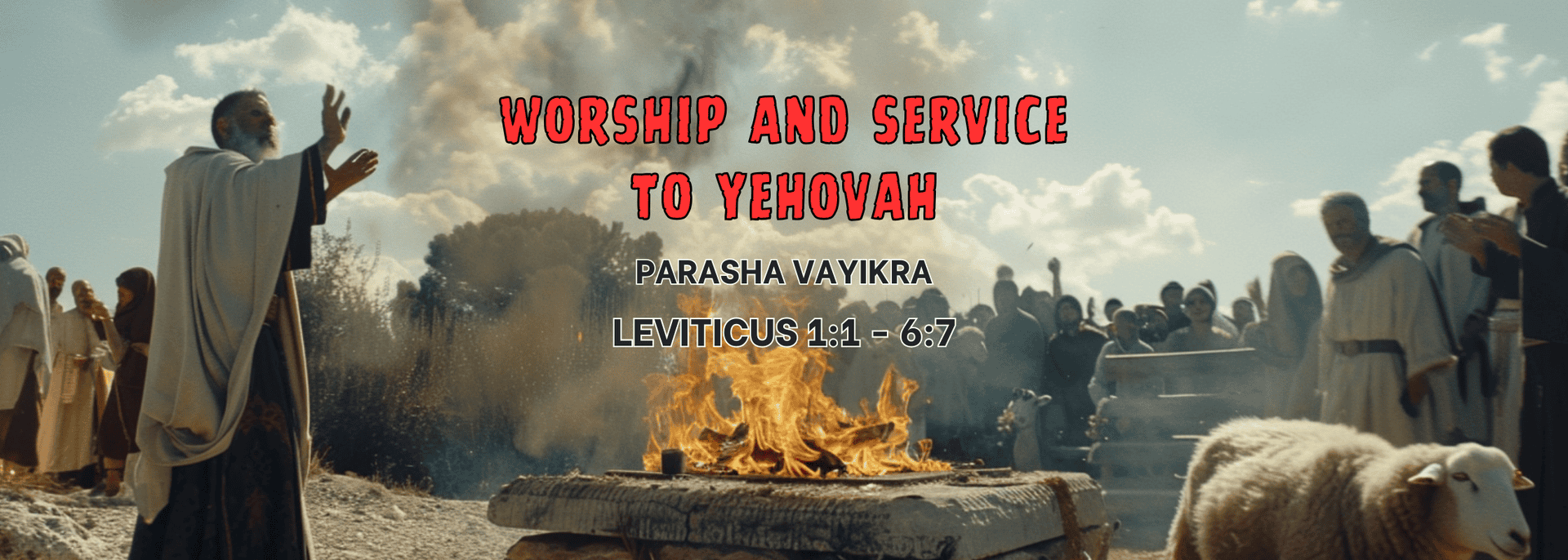

Parashah Vayikra
Vayikra, means: And He called. The book begins with the letter vav, a conjunction that gives us the idea of continuity with the story of


Parashah Tzav
This week’s parashah is called “Tzav” which means “ordinance” and contains teachings that can have various practical applications in our daily life that we will


Parashah Shmini
The name of this parashah means “eighth,” and refers to the “day after” Aaron and his sons completed the seven-day inauguration process of their priesthood…

Parashot Tazria-Metzora
Parashah Tazria Leviticus 12:1 – 13:59 The name of the portion, TAZRIA, is related to the Hebrew root ZARAH, which means “seed”; therefore, an alternative

Parashot Acharei Mot / Kedoshim
Parashah Acharei Mot Leviticus 16:1 – 18:30 In Leviticus, chapter 16, we are presented with the ritual of sacrifices that will be carried out every

Parasha Emor
Parashah Emor Leviticus 21:1 – 24:23 The parashah Emor is found in the book of Leviticus (Lev. 21:1–24:23) and focuses on the laws and rituals

Parashot B’har – B’chukkotai
Parashah B’har Leviticus 25:1 – 26:2 The parashah BeHar, found in the book of Leviticus, means “on the mountain.” All of these instructions, which began

Parashah B’chukkotai
Parashah B’chukkotai Leviticus 26:3 – 27:34 This last portion of Leviticus deals with the blessings that result from obedience as well as the curses that