

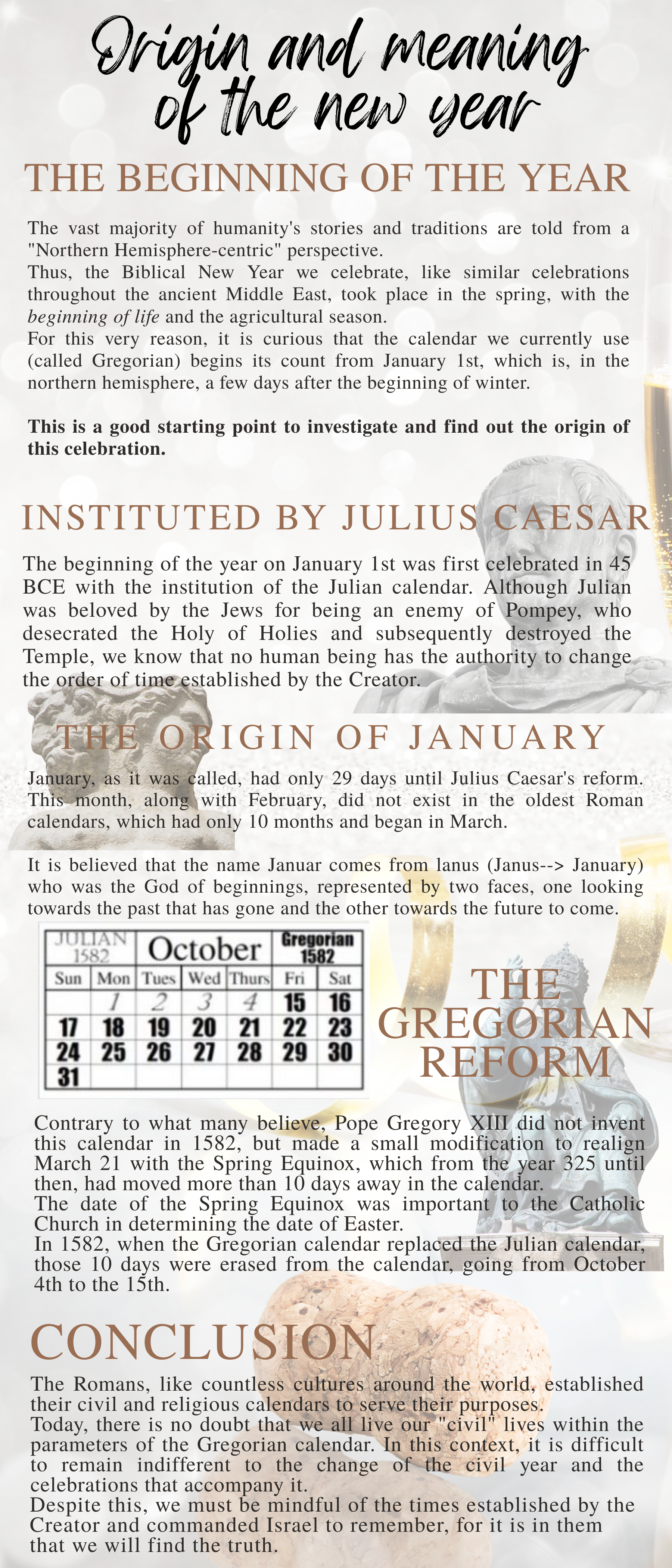
it is curious that the calendar we currently use (called Gregorian) begins its count from January 1st, which is, in the northern hemisphere, a few days after the beginning of winter.
Every year, millions around the world mark the arrival of a “new year” on January 1st, often without pausing to ask a simple but important question: why this date, and where did it come from? The concept of a new year is far older than the modern calendar we use today, and its origins are rooted in agriculture, astronomy, empire, and theology. To understand what we are actually celebrating, it is necessary to step back from modern assumptions and examine how different civilizations understood time, how January 1st became the civil starting point of the year, and how this contrasts with the biblical framework established in Scripture.
2 Responses
This is absolutely Awesome!
I wana know more
Thanks appreciate your truth